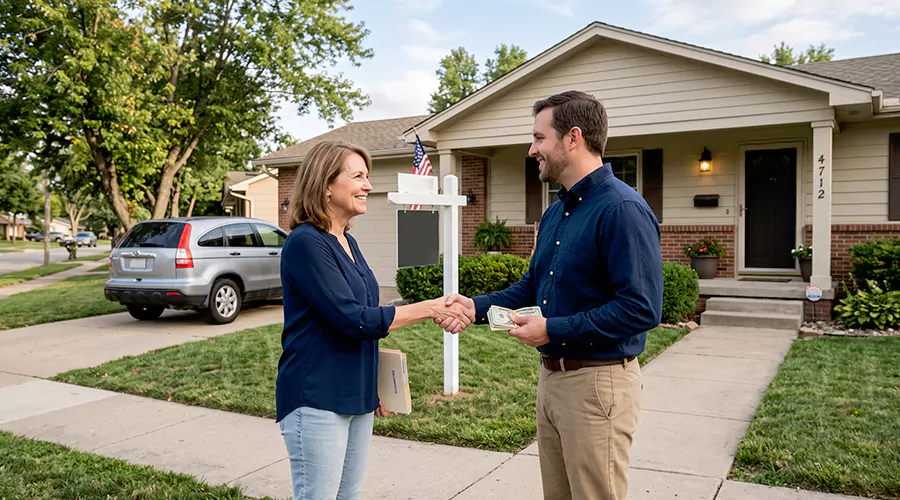


To sell your house for cash, find a legitimate buyer, request a written offer, verify the buyer's funds, and complete the transaction through a title or settlement company. In the United States, a straightforward cash sale may close within 7 to 21 days because the buyer doesn't need mortgage approval. However, title issues or unpaid liens can delay the process.
Selling for cash can reduce the time spent preparing a property and waiting for financing. The main trade-off is the offer amount, which may be lower than the price you could receive through a traditional sale.
How Does Selling a House for Cash Work?
Selling a house for cash means the buyer purchases the property without relying on mortgage financing. The transaction still requires a purchase agreement and a legal transfer of ownership. Cash buyers can include individual investors or companies that purchase residential properties directly.
The process usually involves these steps:
- Gather basic information about your property.
- Research cash home buyers in your area.
- Request a written purchase offer.
- Compare the offer with your home's estimated market value.
- Verify the buyer's proof of funds.
- Review the contract and closing conditions.
- Complete title checks and required disclosures.
- Sign the closing documents and receive your proceeds.
A cash transaction removes the mortgage approval stage, but it doesn't eliminate legal requirements or closing paperwork.
Types of Properties Cash Buyers Purchase
Cash buyers often consider houses that require repairs or have conditions that make a traditional sale more difficult. Some buyers specialize in older properties, while others purchase homes with major maintenance problems.
Properties that may attract cash buyers include:
- Houses with outdated kitchens or bathrooms
- Homes requiring roof replacement
- Properties with water or fire damage
- Inherited houses needing maintenance
- Vacant properties
- Houses with existing tenants
- Homes with foundation problems
Selling a House As-Is
An as-is sale generally means the seller isn't agreeing to complete repairs before closing. For example, a homeowner may sell a property with an aging roof instead of paying for replacement first.
However, selling as-is doesn't automatically remove state disclosure requirements. Known problems may still need to be disclosed according to applicable law.
How Much Will a Cash Buyer Offer?
A cash offer depends on the property's condition and local market value. Buyers may consider expected renovation costs and the expense of holding the property before reselling it. Different buyers can offer different amounts for the same house.
Consider this hypothetical example:
| Property details | Example amount |
|---|---|
| Estimated market value after repairs | $250,000 |
| Estimated repair expenses | $35,000 |
| Holding and resale expenses | $15,000 |
| Hypothetical cash offer | $175,000 |
The example isn't a standard cash-offer formula. The buyer's required profit and financial risk also affect the amount offered.
Compare the cash offer with what you might receive through a traditional sale after accounting for repairs and selling expenses.
Timeline for Selling a House for Cash
A straightforward cash transaction may close within 7 to 21 days when the buyer has available funds and the property has a clear title. Some transactions finish sooner, while complicated ownership situations can require additional time.
Unlike mortgage-financed transactions, cash sales don't require lender underwriting or mortgage approval. However, the settlement company still needs to verify ownership and prepare the transfer documents.
Common causes of delays include outstanding liens and missing ownership documents. Probate proceedings may also extend the timeline. Make sure the agreed closing date appears in the purchase contract. The schedule should leave enough time for moving arrangements.
Documents Required for a Cash House Sale
Cash buyers still need documentation to complete a legal property purchase. Requirements differ by state and the circumstances of the transaction.
Common documents include:
- Property deed or ownership information
- Government-issued identification
- Existing mortgage payoff details
- Required property disclosure forms
- Signed purchase agreement
- HOA documents where applicable
- Title and settlement paperwork
The title or settlement company typically coordinates the transfer of ownership. If you still owe money on the property, the mortgage payoff is generally deducted from the sale proceeds.
How to Find a Legitimate Cash Home Buyer?
A legitimate cash buyer should clearly explain the transaction and provide credible evidence that funds are available. A verbal promise to purchase your house isn't enough to establish financial ability.
Look for a buyer with a verifiable business identity. Review independent feedback and check whether the company has completed similar transactions.
Verify the Offer Before Signing
Request written proof of funds and confirm the purchaser's legal name. Review the agreement for inspection contingencies or conditions that allow the buyer to change the offer.
Be cautious if someone pressures you to sign immediately or requests unusual upfront payments. A reliable transaction should provide clear written terms and a verifiable closing process.
Costs Involved in a Cash Home Sale
Selling a property for cash doesn't automatically mean the seller pays no expenses. The final amount depends on the purchase agreement and local closing requirements.
| Potential expense | What to review |
|---|---|
| Title and settlement charges | Which party pays the fees |
| Transfer taxes | Applicable local or state rules |
| Mortgage payoff | Remaining loan balance |
| Property taxes | Amount prorated at closing |
| Agent commission | Whether an agent is involved |
| Repair expenses | Whether the property is accepted as-is |
Ask for an estimated settlement statement showing how much money you'll receive after deductions.
Cash Sale vs. Traditional Home Sale
Cash sales and traditional listings serve different homeowner needs. A cash transaction may offer a shorter timeline and less preparation. Traditional marketing may attract a higher purchase price, but the sale can depend on financing and negotiations.
| Factor | Cash sale | Traditional sale |
|---|---|---|
| Buyer financing | No mortgage required | Often mortgage-dependent |
| Closing timeline | Potentially shorter | Often longer |
| Property repairs | Some buyers accept as-is | Buyer expectations vary |
| Showings | May require fewer | Often multiple |
| Sale price | May be discounted | May attract higher offers |
| Closing requirements | Still required | Still required |
The right choice depends on your priorities and the estimated proceeds from each option.
When Professional Help Is Worth Considering?
A real estate attorney or qualified settlement professional can help when the property's ownership is complicated. Inherited properties and disputed title claims may require additional legal review.
Professional assistance can also help when the agreement includes unfamiliar conditions or multiple owners must approve the sale. Reviewing the contract before signing can help identify financial obligations and cancellation terms.
Making the Right Decision Before Closing
Selling your house for cash can simplify the process when you want to avoid extensive repairs or a lengthy listing period. However, speed shouldn't replace careful financial review. Compare the written offer with your estimated net proceeds and verify that the buyer can complete the purchase. If the paperwork raises concerns, seek qualified guidance. This week, gather your property documents and estimate its current value.