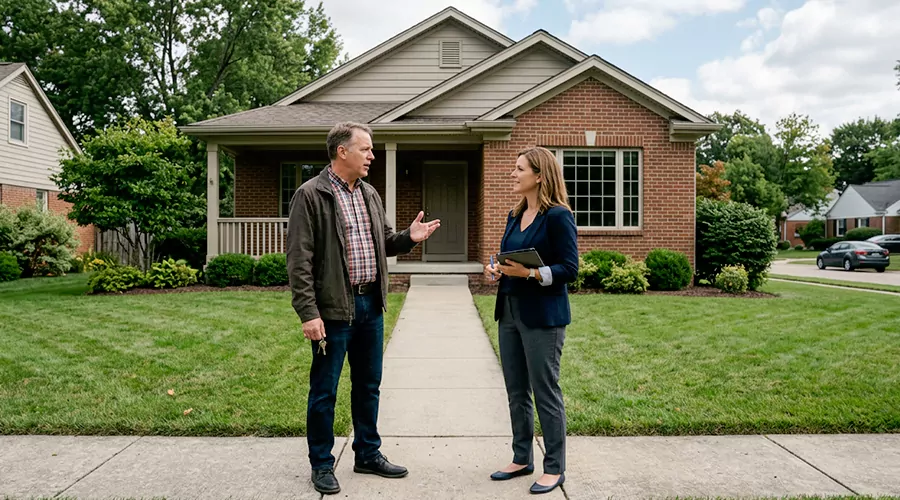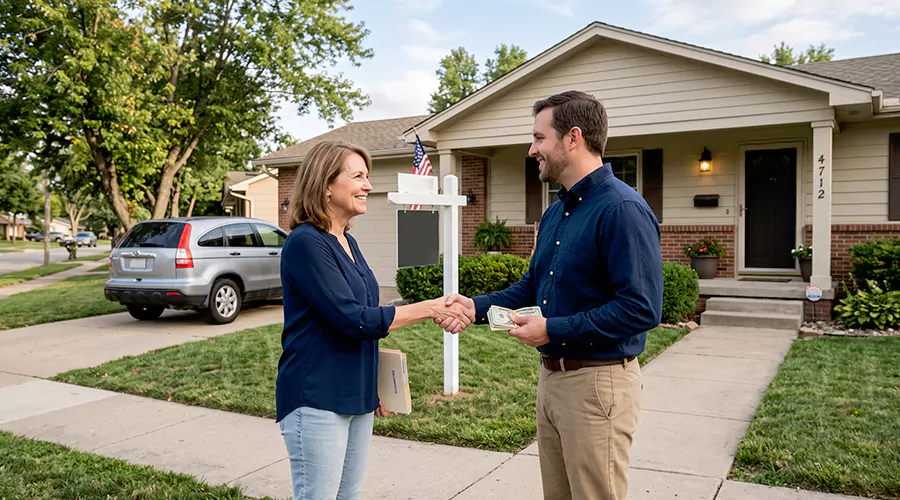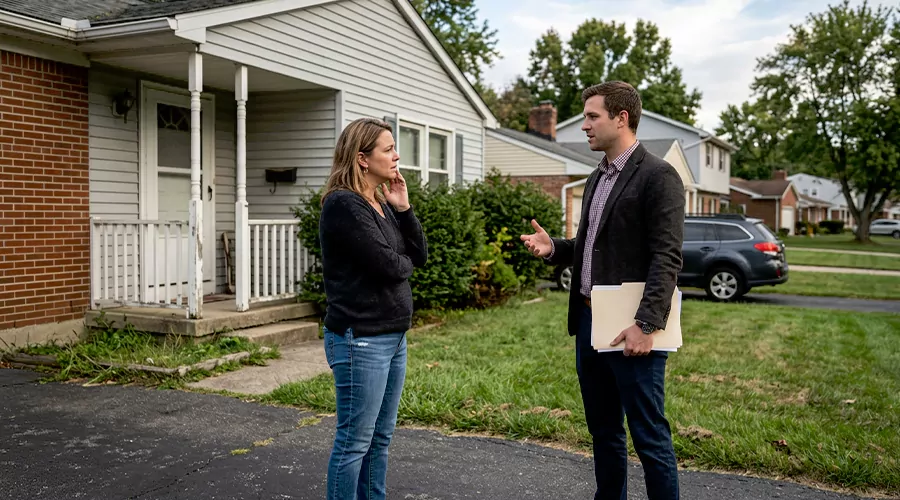



To get a cash offer for your house, contact cash home buyers and provide the property's details to a qualified cash buyer and request a written purchase proposal. Buyers typically review the home's location and condition before deciding what to offer. Some provide initial estimates online, while others schedule a walkthrough before confirming their price.
Getting an offer usually doesn't require listing your home publicly. However, an initial estimate isn't necessarily the final purchase price.
Where to Start When Requesting a Cash Offer?
The first step is gathering accurate information about your house. Cash buyers need enough detail to understand the property's size and general condition.
Useful information includes the address and approximate square footage. Buyers may also ask about major repairs or whether anyone currently occupies the property.
Prepare the Basic Property Details
You don't need to renovate a property simply to request an offer. However, inaccurate descriptions may lead to price changes after inspection.
Gather available records for major repairs and note known problems. A clear explanation of the condition helps buyers prepare a more realistic proposal.
Different Ways to Get Cash Offers
Homeowners can request offers through direct home buying companies or individual property investors. Some technology-based buyers use online valuation systems.
These buyers may have different property requirements and purchasing criteria.
| Buyer type | Typical evaluation method | Important consideration |
|---|---|---|
| Direct cash home buying company | Property details and walkthrough | Offer may reflect renovation costs |
| Individual property investor | Comparable sales and condition | Funding capacity must be verified |
| Technology-based home buyer | Online valuation and assessment | Property eligibility may be limited |
| Private cash purchaser | Negotiated price | Timeline depends on the buyer |
Not every company purchases houses with severe damage. Check its property requirements before submitting detailed information.
How to Request an Offer Step by Step?
A typical offer request involves a few stages. The buyer may need additional information before presenting a final purchase agreement.
- Identify cash buyers operating in your property's area.
- Confirm that they purchase your type of house.
- Gather basic property and ownership information.
- Submit an offer request through the buyer's stated process.
- Describe known repairs or damage accurately.
- Arrange a walkthrough if the buyer requires one.
- Request a complete written offer.
- Review the proposed price and purchase conditions.
You can request offers from several buyers before deciding which transaction best suits your situation. Avoid paying unexplained upfront fees simply to obtain a purchase proposal.
How Cash Buyers Calculate Their Offers?
Cash buyers usually start with the property's estimated value and adjust for its existing condition. Buyers planning to renovate may also consider holding expenses and resale risk.
For example, a house worth $280,000 after improvements might need $45,000 in repairs. The buyer must account for those costs when determining an acceptable purchase price.
Understanding the Investor Discount
Some buyers expect a return for purchasing and repairing the property. That expected return may lower their offer compared with the price available for a renovated house. There is no standard percentage of market value that every cash buyer pays.
A strong offer should be evaluated alongside the buyer's ability to close and the expenses you would otherwise face.
Initial Estimates vs. Final Written Offers
An online estimate provides an early indication of what a buyer might pay. It may change after the buyer verifies the property's condition.
A final written offer should clearly identify the purchaser and the proposed purchase price. It should also include the closing date and any inspection conditions.
| Offer detail | Initial estimate | Written purchase offer |
|---|---|---|
| Property condition | Based on supplied details | May follow verification |
| Purchase price | Preliminary figure | Proposed contractual amount |
| Closing date | Often approximate | Stated in agreement |
| Fees and deductions | May be incomplete | Should be disclosed |
| Cancellation terms | Usually not established | Defined by contract |
Don't rely on an online estimate when calculating how much money you'll receive. Review the written terms first.
How to Compare Multiple Cash Offers?
The highest purchase price isn't necessarily the best financial result. Offers can differ in closing expenses and inspection requirements. Suppose one buyer offers $205,000 but asks the seller to cover $5,000 in expenses. Another offers $202,000 and agrees to cover those expenses.
The second proposal could leave the seller with more money, assuming all other terms are equal. Compare the final estimated proceeds and the likelihood of closing. Also check whether the buyer can reduce the price after inspection.
Verify the Buyer's Proof of Funds
A buyer's claim to have cash doesn't prove the funds are available. Before signing an agreement, request credible proof of funds. Acceptable evidence may include a recent financial institution letter or a statement showing sufficient liquid assets. Sensitive account details can be redacted.
Confirm that the evidence corresponds to the actual purchaser. A document from an unrelated individual may not establish the contracting company's ability to pay. Where practical, have the settlement provider verify the funding arrangements through established channels.
Warning Signs of an Unreliable Cash Offer
A written proposal deserves careful review even when its price appears attractive. Some buyers use contract conditions that create unnecessary uncertainty for sellers.
Watch for the following:
- The buyer refuses to provide credible financial evidence.
- The offer expires before you have reasonable time to review it.
- The contract permits unexplained price reductions.
- Fees are described vaguely or left out entirely.
- The buyer requests an unusual upfront payment.
- The purchasing company cannot be identified.
- The proposed closing process lacks an appropriate settlement provider.
- The buyer pressures you to sign without reviewing cancellation terms.
A legitimate transaction should clearly explain how the sale will be completed.
What Happens After You Accept an Offer?
Once both parties sign the agreement, the transaction enters the closing stage. The settlement provider examines title records and identifies outstanding claims.
An existing mortgage can generally be paid off through the closing process. The seller receives the remaining proceeds after applicable expenses. Cash transactions can sometimes close in 7 to 21 days when the title is clear. The actual timeline depends on the agreement and required documentation.
When Professional Review Is Helpful?
A real estate attorney can help explain unfamiliar purchase conditions or assignment provisions. A settlement professional can clarify title requirements and estimated closing deductions.
Independent advice is especially useful if a buyer makes major changes to an offer after inspection. It can also help when ownership documents are incomplete. Reviewing these details before signing reduces the risk of unexpected obligations.
Get an Offer That Works Beyond the Headline Price
Getting a cash offer starts with accurate property details and a qualified buyer. The strongest proposal is one you understand and can reasonably expect to close. Compare written terms and verify the buyer's available funds before accepting. Professional review can help with complicated agreements. This week, gather your property information and compare the estimated net proceeds from more than one offer.