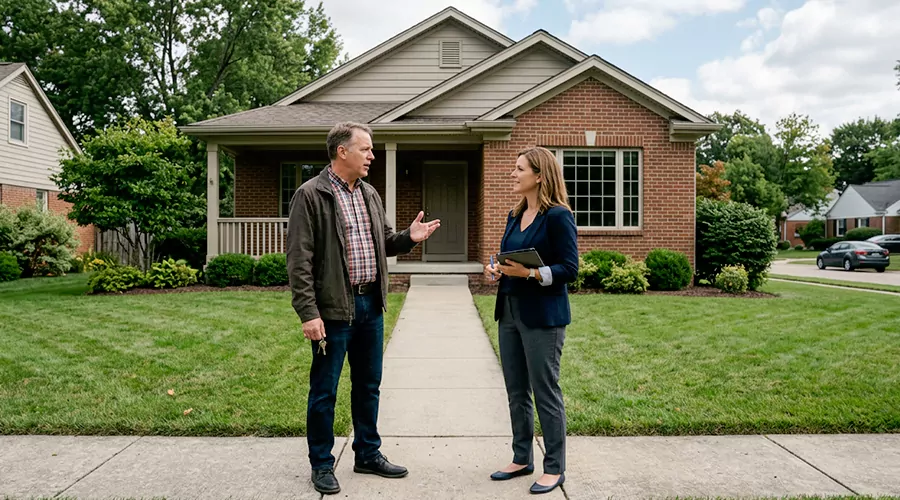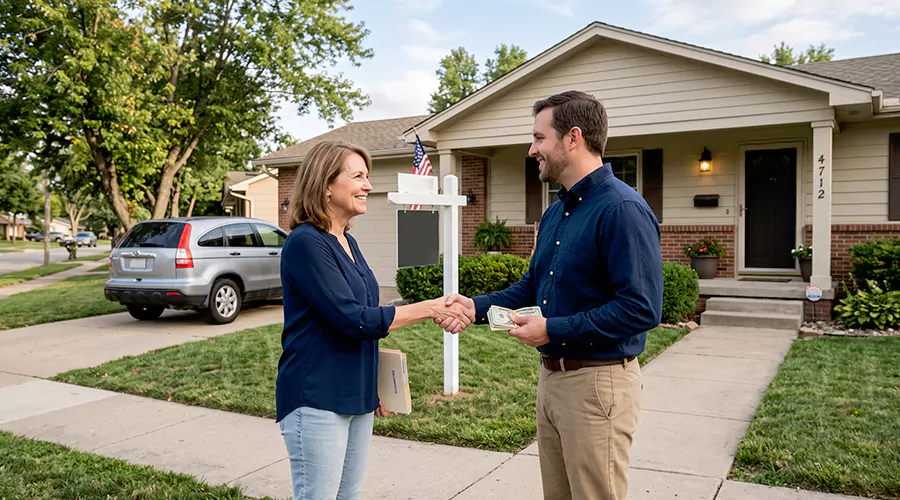



You can sell a house without a Realtor by handling the pricing, marketing and negotiations yourself while using the appropriate professionals for legal paperwork and closing. This approach is called For Sale By Owner (FSBO). On a $400,000 home, avoiding a hypothetical 2.5% listing-agent commission would save $10,000 before other selling expenses. Homeowners looking to sell fire-damaged house can also explore this approach if they are prepared to manage buyer communication and disclose the property's condition accurately. Selling independently gives you more control over the transaction. However, you must understand the local housing market and manage buyer communication. A successful sale requires accurate pricing, proper documentation and a clear understanding of the closing process.
Understanding the For Sale By Owner Process
Selling a house without a Realtor means taking responsibility for tasks normally handled by a listing agent. These include determining the asking price and finding interested buyers. You also manage offers and coordinate the transaction until ownership transfers to the buyer. The process is legal throughout the United States, although state requirements differ. You can still hire individual professionals for specialized work. Selling independently does not mean completing every legal or financial task without assistance.
Preparing Your House for Sale
A successful independent sale begins with understanding your property's condition and current market value. Buyers compare homes based on location and available features. Preparing accurate information before advertising helps prevent unrealistic expectations and unnecessary negotiations later.
Determine Your Home's Market Value
Start by researching recently sold properties in your neighborhood. Focus on homes with similar square footage and condition. Sales completed within the past three to six months can provide useful comparisons, although rapidly changing markets may require more recent data. Avoid relying entirely on online valuation tools because automated estimates cannot identify every property difference. A home with a renovated kitchen may command a different price than a similar property with outdated interiors. An independent appraisal can provide another reference point when comparable sales are limited.
Complete Necessary Property Preparation
Buyers should be able to inspect the property without unnecessary obstacles. Remove clutter and clean the main living areas before taking photographs. Address minor maintenance problems when the likely benefit justifies the expense. Major renovations are not always necessary. If the property needs substantial work, you can explain its condition and price it accordingly. Cosmetic improvements should never conceal known defects.
Marketing Your Home Without a Listing Agent
Reaching enough qualified buyers is one of the biggest challenges of an independent sale. Public listings increase exposure, while private outreach limits the audience. Your marketing approach should reflect the property's condition and your preferred selling timeline.
Create an Effective Property Listing
A useful listing provides accurate information about the house. Include the asking price and interior square footage, along with photographs showing its actual condition. Mention recent improvements when supporting records are available. You can advertise through owner-listing websites or purchase limited listing services from a licensed broker. Some flat-fee services provide access to a Multiple Listing Service (MLS). Compare their terms because access and included services differ.
Manage Buyer Inquiries and Showings
Respond to serious inquiries with consistent information about the property. Before scheduling a viewing, ask whether the buyer has mortgage preapproval or intends to pay cash. These details help identify whether the buyer can realistically complete a purchase. Arrange appointments instead of allowing unannounced visitors into your home. Protect personal documents and valuables during showings. Never give unsupervised access to an unverified stranger.
Reviewing Offers and Negotiating the Sale
An acceptable offer involves more than the amount a buyer is willing to pay. Financing conditions and requested concessions can affect the final proceeds. Review all terms before deciding whether an offer meets your needs.
Compare the Financial Terms
Consider a $350,000 offer with a $10,000 seller credit. The effective amount before other expenses is $340,000. A separate offer of $345,000 without that credit may therefore leave you with more money. The buyer's ability to complete the transaction also matters. Mortgage financing usually introduces lender approval requirements. Cash offers avoid mortgage underwriting but still require verification of available funds.
Understand Contract Contingencies
Purchase agreements commonly include inspection or financing contingencies. These provisions describe when a buyer can request changes or cancel under the contract. Carefully review the deadlines because missed dates can create disputes. Earnest money should be handled according to the agreement through an appropriate escrow or closing service. Do not assume a deposit becomes yours if a buyer withdraws. Its treatment depends on the contract and applicable law.
Costs of Selling Without a Realtor in 2026
An independent sale eliminates the listing agent's compensation only when no listing agent is hired. Other expenses may still apply, including closing services and transfer taxes. Buyer-agent compensation is also negotiable rather than automatically required.
The following comparison illustrates potential listing-side commission savings on a $400,000 sale.
| Hypothetical listing commission | Amount avoided |
|---|---|
| 1% | $4,000 |
| 2% | $8,000 |
| 2.5% | $10,000 |
| 3% | $12,000 |
These figures are mathematical examples rather than standard commission rates. Actual commissions are negotiable and not established by law. A seller's savings depend on the services purchased and the final agreement.
Required Paperwork and Legal Responsibilities
Selling independently does not remove the legal requirements of a property transfer. Most transactions need a written purchase agreement and applicable seller disclosures. Closing documents must also satisfy state requirements.
Property Disclosures and Ownership Records
Disclosure rules vary considerably across states. Some require detailed seller disclosure forms, while others use different rules or exemptions. Known material defects must be handled according to the law governing the property. Federal rules also apply to most residential properties built before 1978. Sellers generally must provide lead-based paint information and give buyers a 10-day inspection opportunity unless the parties agree to a permitted modification. Keep signed disclosure records with the transaction documents.
Title Transfer and Closing Documents
A title search can reveal ownership problems or recorded liens. Unresolved issues may delay the transfer even when both parties agree on the price. Existing mortgages are generally paid off through the closing process. The closing professional prepares or coordinates the documents needed to complete the transfer. Review the settlement figures before signing. Confirm that the sale proceeds have been properly disbursed before releasing possession.
When Professional Assistance Makes Sense
A real estate attorney can review the purchase agreement when the terms are unfamiliar or ownership is complicated. Some states require attorney participation in residential closings. A title or escrow company can coordinate settlement tasks where permitted. Consider obtaining specialized advice when the property has unresolved liens or disputed ownership. Such problems involve legal questions that ordinary marketing knowledge cannot resolve. Independent selling remains possible even when professionals handle individual parts of the transaction.
Completing Your Home Sale With Confidence
Selling independently can reduce commission expenses while giving you control over important decisions. The main responsibilities involve accurate pricing and careful management of the transaction. Prepare the property honestly and compare offers based on net proceeds. Use appropriate closing procedures to protect both parties. Before advertising, gather your ownership documents and review recent comparable sales to establish a realistic starting price.