

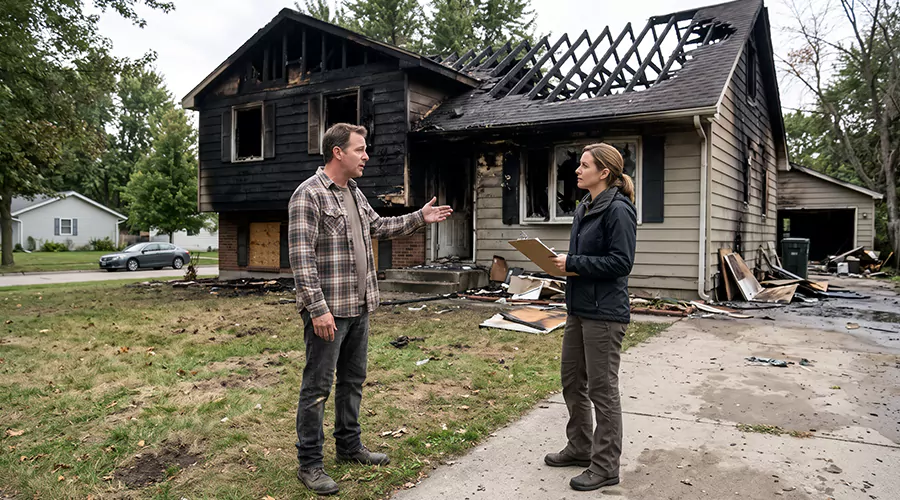
To sell a fire-damaged house, confirm the property is safe to assess, document the loss, review any insurance claim, and compare repairing the home with selling it in its damaged condition. A direct cash buyer may purchase a house that needs extensive restoration. Homeowners looking to sell damaged house should also provide proper disclosures and reach an agreement addressing unresolved insurance claims.
Put Safety and Damage Records First
Do not enter a fire-damaged home until the appropriate local authorities say it is safe. Heat and smoke can weaken structural components, while damaged utilities may create serious hazards. Photograph accessible areas only when entry is permitted, and do not disturb unstable material for the sake of marketing photographs.
Understand the Different Types of Fire Damage
Fire damage extends beyond visibly burned surfaces. Smoke can spread through rooms that never had flames, and water used to extinguish the fire can affect floors or walls. The likely repair scope depends on which systems were exposed and whether the structure remains sound.
| Damage | Possible effect on sale | Information to gather |
|---|---|---|
| Charred framing | Structural safety concern | Existing structural assessment |
| Smoke residue | Specialized cleaning needs | Restoration evaluation |
| Firefighting water | Hidden moisture damage | Moisture or mitigation report |
| Damaged wiring | Electrical safety concern | Licensed electrical findings |
| Roof or exterior openings | Further weather exposure | Temporary protection records |
What Happens to the Insurance Claim?
Contact your insurer promptly and review the coverage provided by your policy. Document the damage and preserve receipts before making permanent changes. The Washington State Office of the Insurance Commissioner recommends keeping copies of claim communications and confirming the insurer's inspection process.
Claim Payments May Depend on Repairs
Replacement cost and actual cash value coverage can produce different payments. Some policies release additional benefits after qualifying repair or replacement work is completed. Selling before restoring the house could affect those benefits, so ask the insurer how the proposed sale changes the claim. Do not assume an open claim automatically transfers to the purchaser. Any arrangement concerning claim proceeds needs to be supported by the policy and reflected clearly in the transaction documents.
Compare the Main Ways to Sell After a Fire
The appropriate route depends on structural condition and the money available for restoration. Repairing first may broaden the buyer pool, while an as-is cash purchase can reduce the work the seller manages. A severely damaged building may be valued primarily for its land, subject to local requirements.
| Selling route | Possible benefit | Main trade-off |
|---|---|---|
| Repair then list | Home may appeal to more buyers | Cost and restoration time |
| Sell as-is for cash | Avoids completing restoration | Offer reflects damage and risk |
| Sell for land value | May fit extreme losses | Removal and permit issues |
Compare the likely net proceeds rather than using the pre-fire market value as the only benchmark. The value before damage and the property's current value are different questions.
How Buyers Value a Fire-Damaged Property
A buyer often starts with the estimated value of the restored property. The offer may then reflect repair work and the possibility of concealed damage. Fire and smoke can complicate valuation because a walkthrough may not reveal every affected system. For example, suppose the estimated restored value is $300,000 and documented restoration work could cost $90,000. A buyer may subtract additional holding expenses and an allowance for uncertainty. The resulting offer could be significantly below $210,000 without representing a fixed market discount.
Steps to Sell the Property in Its Current Condition
An organized sale relies on safety information and clear documentation. Buyers should receive an accurate description of the damage instead of assumptions about what can be repaired.
- Obtain official clearance before entering unsafe areas.
- Report the loss and review the insurance policy.
- Save incident records and safe-access photographs.
- Gather existing restoration estimates and permit information.
- Determine whether the mortgage lender has a claim interest.
- Request written offers from buyers accepting fire damage.
- Review disclosures and the treatment of insurance proceeds.
- Complete title work and the documented closing.
Compare Repairing and Selling As-Is
Restoration can raise the selling price but requires funding and time. Insurance may cover eligible work, although deductibles and coverage limits can change the owner's actual expense. A direct as-is offer avoids much of the construction process but will usually be lower.
| Illustrative 2026 calculation | Sell as-is | Repair before sale |
|---|---|---|
| Sale price | $125,000 | $250,000 |
| Seller-funded restoration | $0 | $95,000 |
| Other sale expenses | $3,000 | $12,000 |
| Proceeds before debt | $122,000 | $143,000 |
The numbers are hypothetical and exclude any insurance proceeds. A valid comparison must account for claim payments and whether restoration benefits are actually available in each route.
Mortgage Payoffs and Required Disclosures
A remaining mortgage does not disappear after a fire. The lender may have rights under the insurance policy, and the loan generally must be addressed at closing. Ask the servicer for payoff information and clarify whether insurance proceeds are subject to lender controls. State property disclosure rules may require reporting known fire damage and previous repairs. Selling as-is doesn't automatically remove those requirements. Most pre-1978 housing also carries federal lead-based paint disclosure duties unless an exemption applies.
Avoid Decisions That Create More Loss
Do not demolish damaged sections before confirming local permits and insurance requirements. Disposal of evidence may complicate claim review, and demolition can involve hazardous materials. Secure the site against unauthorized access through lawful protective measures rather than attempting unsafe cleanup yourself. If a buyer proposes a fast sale, read inspection and cancellation provisions before accepting. A written offer should specify who handles remaining debris and when possession transfers. Also clarify any unpaid restoration invoices or contractor liens.
When Professional Assistance Is Needed
A qualified structural specialist can assess whether the building is safe and repairable. An insurance adjuster or other appropriately licensed claims professional can clarify coverage questions. A real estate attorney or settlement professional can review unresolved claims and mortgage obligations before ownership changes.
Decide With Safety and Claim Rights in Mind
A fire-damaged house can be sold without full restoration when an informed buyer accepts its condition. However, the insurance claim and mortgage obligations can materially affect the amount you keep. Preserve reliable damage records and compare both selling routes using realistic costs. This week, obtain your policy documents and clarify the status of the claim before signing a purchase agreement.