

To sell a damaged house for cash, document the known damage, find buyers who purchase properties needing work, and compare written offers based on repair assumptions and net proceeds. Cash buyers may purchase a home that traditional mortgage lenders consider difficult to finance. However, damage can substantially reduce what a purchaser is willing to pay. If you want to Sell Estate Property, understand which problems affect value and which risks the buyer is accepting. A well-documented property often receives a more meaningful evaluation than one described only as needing work.
Identify the Damage Before Requesting Offers
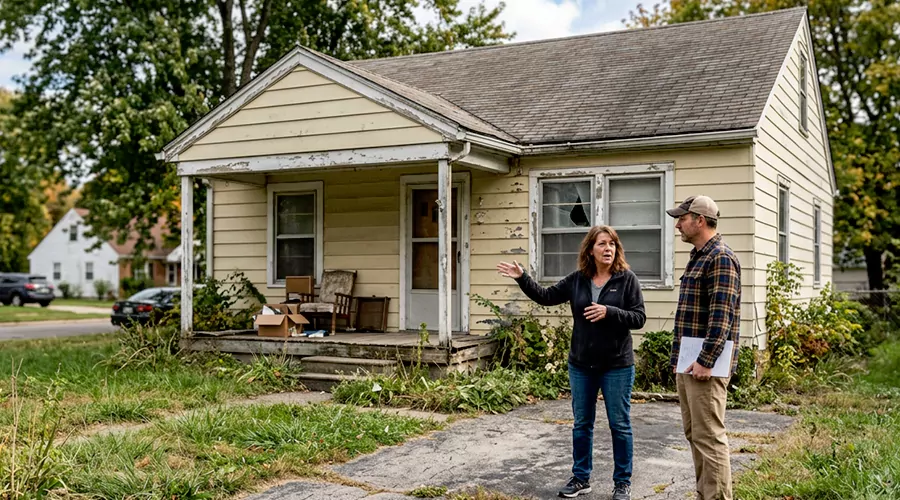
Damaged properties are not all alike. An outdated bathroom presents a different investment risk from a shifting foundation or an unsafe electrical system. List known defects by location and note whether the cause has been corrected. Keep existing photographs and reports rather than guessing at repair costs. If damage is still occurring, such as an active water leak, protect the property from additional harm when safe. Record what you did and keep receipts. You should not enter an unsafe structure or attempt work beyond your ability simply to prepare for a sale.
Types of Property Damage That Affect Cash Offers
Buyers evaluate both visible problems and the possibility of concealed defects. Serious structural damage may limit the available buyer pool, while cosmetic wear may require a smaller allowance. The property's location still affects its underlying value.
| Damage type | Main valuation concern | Useful record |
|---|---|---|
| Water intrusion | Hidden moisture and mold | Leak history and photos |
| Fire and smoke | Structural and system damage | Incident and insurer records |
| Foundation movement | Repair complexity | Existing engineering findings |
| Storm-damaged roof | Water protection | Roof inspection or claim |
| Termite activity | Concealed wood damage | Treatment or inspection report |
A buyer might accept one of these conditions while declining another. Confirm the purchaser's requirements instead of assuming every cash investor buys every damaged home.
How Buyers Estimate a Damaged Home's Value
Many investors compare the property's estimated value after renovation with its present condition. They calculate expected repair spending and account for holding expenses. A buyer also needs enough financial margin to cover uncertainty, particularly when damaged areas cannot be fully inspected.
Understanding Repair Allowances
Suppose comparable renovated houses sell for around $260,000. If your home needs a $45,000 renovation, an investor may offer substantially less than $215,000 after accounting for other costs. The buyer's calculation is not a fixed industry formula, and a second investor may value the same house differently. Ask what major repairs support a large reduction. When possible, compare the buyer's assumptions with documented findings rather than accepting a vague statement that the house needs extensive work.
Find Buyers Who Purchase Damaged Properties
Look for direct cash buyers whose stated property criteria match the problem. Some investors specialize in substantial renovations, while others purchase homes with mainly cosmetic defects. A company that advertises instant offers may decline properties with severe structural or fire damage. Verify the actual purchaser's business identity and request credible proof of funds. Review whether the company is buying directly or intends to assign the purchase agreement. A serious offer should explain the inspection period and the circumstances under which the price may change.
Steps to Sell a Damaged House for Cash
Start by assembling the information a buyer will need, then evaluate complete written proposals.
- Make a room-by-room list of known damage.
- Gather available inspection reports and repair estimates.
- Check nearby completed sales for comparable property values.
- Identify buyers willing to purchase the existing condition.
- Request written offers showing all proposed deductions.
- Verify funds and review inspection deadlines.
- Complete applicable disclosures and title review.
- Sign closing documents after checking the settlement statement.
Do not remove damaged materials that form part of an open insurance claim without first checking the claim requirements. Preserving evidence may affect the amount an insurer will pay.
Compare Selling As-Is With Repairing First
A renovation may increase the potential price, but the higher figure must be weighed against actual construction costs. Repairing before listing can also extend the ownership period and create additional carrying expenses. In some cases, selling in the current condition leaves nearly as much money.
| Hypothetical outcome | Sell damaged as-is | Repair then sell |
|---|---|---|
| Purchase price | $170,000 | $230,000 |
| Seller repair expenses | $0 | $43,000 |
| Selling expenses | $3,000 | $12,000 |
| Proceeds before debt payoff | $167,000 | $175,000 |
These 2026 dollar figures are illustrative rather than national averages. The repaired sale leaves $8,000 more here but requires upfront funding. Confirm realistic contractor estimates before assuming the repair route is financially stronger.
Disclosure Rules and Insurance Claims
An as-is contract generally does not remove duties to disclose known material problems under applicable state law. Provide accurate information about prior flooding or structural repairs when disclosure is required. Federal lead-based paint rules can also apply to most residential homes built before 1978. If an insurance claim is open, ask the insurer how a sale would affect remaining payments. Claim rights and repair-based benefits may depend on policy language. Do not promise a buyer that insurance proceeds will transfer unless the arrangement has been reviewed and documented.
Check the Contract Before Accepting
A written offer should identify the buyer and price along with any inspection conditions. Some buyers can renegotiate after finding additional damage. Others offer fewer contingencies but a lower starting amount. Compare the certainty of each transaction alongside the amount offered. Ask who pays closing charges and whether the agreement can be assigned. Make sure the closing and possession dates allow enough time to remove belongings safely. The title provider will also need to address recorded liens or mortgage payoffs.
When Professional Help Is Appropriate
A licensed inspector or structural engineer can help establish the extent of serious defects. An insurance professional can explain unresolved claim obligations. A real estate attorney or settlement provider can review ownership issues and the purchase agreement when complicated terms arise. These evaluations are especially useful when a buyer sharply reduces its price after inspection. Independent findings can help distinguish verified repair needs from unsupported assumptions.
Make the Sale Decision Using Verified Numbers
Selling a damaged house for cash can avoid a major renovation, but the buyer will usually account for the property's condition. Document defects honestly and compare complete written proposals. Check how insurance and existing debt affect your final proceeds before signing. This week, organize your damage records and obtain a realistic estimate of the most expensive outstanding repair.