

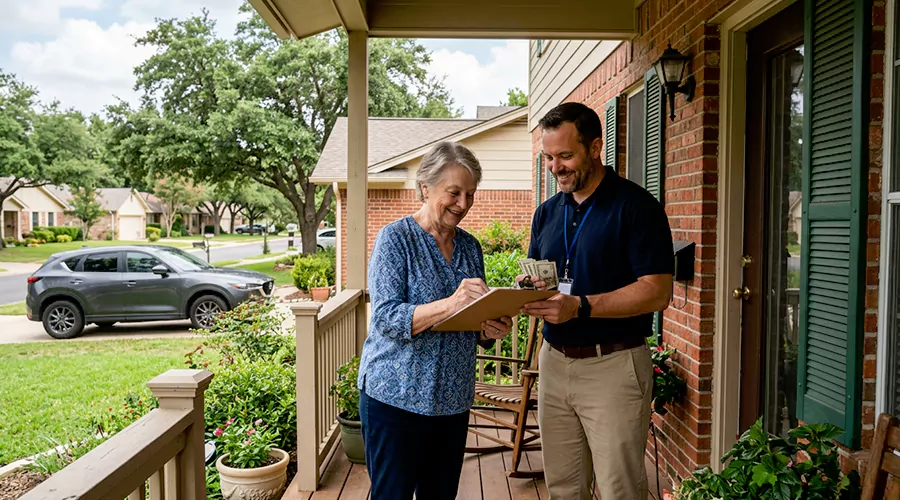
To get the best cash offer for your house, research its current market value, provide accurate property information, and compare written offers from several qualified cash home buyers. A strong cash offer should provide reasonable net proceeds with clear contract terms. The highest advertised purchase price doesn't always leave you with the most money.
According to the national association of realtors, 26% of home buyers in its 2025 survey purchased without mortgage financing. Cash buyers are an established part of the housing market, but their offers depend on property condition and purchasing goals. Understanding these differences can help you negotiate without accepting unnecessary deductions.
Start With an Accurate Property Valuation
Knowing your home's approximate market value gives you a stronger starting point for negotiations. Review recent sales of comparable houses in your neighborhood rather than relying only on online estimates. Focus on properties with similar square footage and condition that sold within the last three to six months when enough comparable sales are available.
A recently renovated property may have a higher value than a nearby house requiring major repairs. Look at the actual differences before using another property's sale price as your target. Record the most relevant comparable sales so you can explain your expectations if a buyer presents a significantly lower offer.
Understand How Cash Buyers Calculate Offers
Cash buyers usually evaluate a property's condition and estimate its potential resale or rental value. Investors purchasing houses for renovation also consider repair expenses and the financial risks involved. These calculations can produce different offers for the same property because each investor has different requirements.
For example, a house with an estimated renovated value of $300,000 might need $40,000 in repairs. A buyer may also account for carrying expenses and the expected return on the investment. The final purchase offer depends on these assumptions rather than a universal discount percentage.
Improve Your Offer Without Expensive Renovations
You don't necessarily need to renovate your property before requesting cash offers. Minor maintenance can make the condition easier to evaluate, but large improvements may not recover their full cost in the selling price. Compare the expected increase in an offer with the money required to complete the work.
Prepare Accurate Property Information
Gather available records for roof replacements and other major repairs. Explain known damage clearly rather than allowing buyers to discover unexpected problems later. Accurate information can reduce the chance of a substantial price adjustment after an inspection.
A clean property with accessible rooms can also make a walkthrough easier. However, cosmetic preparation should not become an expensive project when the buyer intends to renovate the home.
Compare Several Qualified Cash Buyers
Different buyers may value the same property differently. One investor may specialize in houses requiring major repairs, while another may prefer homes needing only cosmetic improvements. Comparing several proposals can reveal whether the first offer reflects the broader market.
| Evaluation factor | Why it matters |
|---|---|
| Written purchase price | Establishes the proposed transaction value |
| Buyer funding | Indicates ability to complete the purchase |
| Inspection conditions | Shows when the price might change |
| Seller closing expenses | Affects money received |
| Closing timeline | Determines when funds may be available |
| Contract cancellation rights | Influences transaction certainty |
Request complete written terms rather than comparing verbal estimates. A company offering a higher initial price may include conditions that reduce its final value.
Calculate Your Actual Cash Sale Proceeds
The purchase price is only one part of the financial comparison. Mortgage payoffs and agreed seller expenses reduce the money remaining after closing. Use the same cost categories when reviewing each offer.
Consider this hypothetical example:
| Transaction detail | Buyer A | Buyer B |
|---|---|---|
| Purchase price | $230,000 | $225,000 |
| Seller-paid expenses | $7,000 | $1,500 |
| Mortgage payoff | $80,000 | $80,000 |
| Estimated net proceeds | $143,000 | $143,500 |
Buyer B leaves the seller with $500 more despite offering a lower purchase price. These numbers are illustrative rather than typical market averages. Ask for an itemized settlement estimate to identify deductions before accepting an offer.
How to Negotiate a Better Cash Offer?
Negotiation works best when you can support your requested price with property information. Recent comparable sales and documented improvements provide stronger evidence than an unsupported asking price. Ask the buyer to explain major repair deductions before suggesting a revised amount.
Negotiate the Terms Alongside the Price
An increased purchase price isn't the only possible improvement. A buyer may agree to cover certain closing expenses or offer a possession date that better fits your moving plans. These changes can improve the transaction's practical value without increasing the advertised price.
Keep negotiated changes in writing. An informal promise about fees or repairs may not control the transaction if the signed agreement contains different terms.
Check the Buyer Before Accepting a Higher Offer
A generous offer has little value when the buyer cannot complete the purchase. Request credible proof of available funds and verify that the evidence corresponds to the purchaser named in the contract. Check the business identity and review independent information about previous transactions.
Watch for buyers who repeatedly change their terms or refuse to explain inspection conditions. A large initial offer followed by an unexpected reduction can delay your sale. Evaluate closing reliability alongside the purchase price.
Mistakes That Can Reduce Your Final Offer
Homeowners sometimes focus on getting the highest number without checking the conditions attached to it. Others pay for expensive renovations before learning whether a direct buyer will value those improvements. Both approaches can reduce the financial benefit of a cash transaction.
Common mistakes include accepting the first proposal without comparison and relying on an inaccurate online valuation. Failing to disclose known property problems may also create disputes after an inspection. Review every deduction carefully before agreeing to a final price.
When Professional Guidance Can Help?
An independent appraisal may help when comparable properties are difficult to identify or buyers provide widely different valuations. A real estate attorney can explain unfamiliar agreement terms. Settlement professionals can also clarify expenses affecting the amount received.
Professional review is particularly useful when ownership is disputed or the property has unresolved liens. Understanding these issues early can prevent unexpected changes before closing.
Make Every Dollar in the Offer Count
Getting the best cash offer requires understanding your home's value and comparing the complete financial terms of each proposal. A competitive price matters, but the amount you receive after expenses matters more. Use documented property information during negotiations and verify the buyer's funds before signing. This week, review recent comparable sales and prepare a written summary of your home's condition.